%20(8).png)
%20(2)_j.jpg)
%20(2).png)
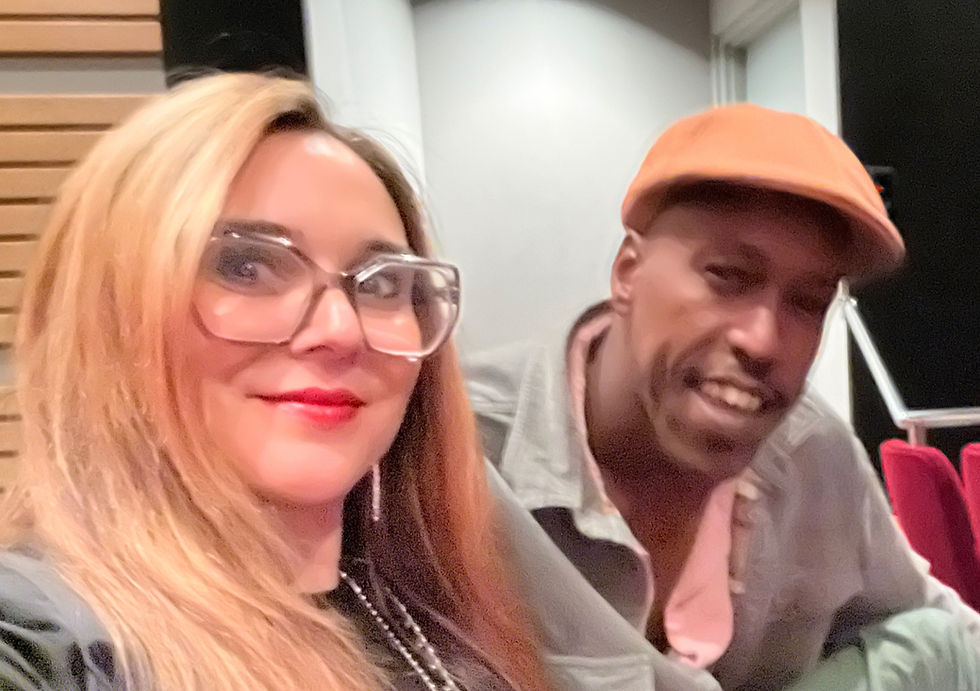
Tim Planagan, LISFF 2026, Feature Screenplay Finalist

- Can you please tell us about you and your daily life?
I live in Portland OR, with my partner and two cats, Carlo and Bella. I feed a few outdoor cats which means my backyard has become very popular for racoons and opossums as well as a few adorable felines. My wife is not a fan of the ecosystem I unintentionally created but as long as I keep their bellies full, there is harmony. I am 48 years old but, in many ways, I am the crazy cat person. I enjoy traveling, talking to strangers, and journalling. I enjoy being present, but love skipping through other’s perspectives and imagining what each person (or animal’s) backstory’s might include. I work as a producer and own a video production company. After a long workday, feeding animals, and writing, any time left is spent making up alternate lyrics to popular songs. My wife and I have quite the curated catalogue of questionably appropriate song lyrics which we have developed over years from long road trips together.
- When and how did you get into writing?
As a child I didn't have many toys and as a latchkey kid in a very small agricultural town, I spent hours using my imagination to entertain myself. I recognized later that creating stories had become a place where I felt satisfaction. If I came up with an idea for a character a line of dialogue that I felt was good, I felt I did something worthy that day. Like I contributed to the world in some way, even if nobody would ever read it. The act of taking a creative spark and bringing it to life on paper was in a way, making it real. When I was in 4th grade, we were asked to write a short story for a regional story telling competition and I ended up getting 3rd place. I think that was the moment I realized that not only do I love this craft, but I might also not be the worst at it.

- How often do you write? Do you have a writing routine? And what inspires you to write?
When I am in a project, I write every evening for 3 to 4 hours. This can go on for years. I find that once you condition your brain to be active at certain times via a routine (which takes a few weeks), it will be there for you, and it does not need to rely on being inspired to get to work. Though it is amazing when inspiration gets you to the page. I also found that if I am not having fun while writing, I stop. I try again later. Nothing good comes from laboring through the work. My best stuff happens when I am having fun. I could have had the worst day, but one good line of dialogue can change it. It’s like medicine.
- How does it feel to have your work recognised?
There is certainly a feeling of validation that comes with recognition. I can only speak for myself, but I am not a fast writer. I spend an embarrassing amount of time writing to get a few pages of good work out. The rewrites and more rewrites, and more… take a tremendous amount of time for me to complete. I might think that what I write is good but having my work recognized helps me feel like I wasn't insane for thinking it. I am insane, just not for that reason.
- What's the best and most challenging thing about writing?
I find the most challenging thing is coming up with a new idea for a story and not talking yourself out of taking it on. Each story could take months or years to write and I wonder if this idea is worth it? I have to ask myself: why is it important? Are the characters strong enough to drive the plot? And does it scare me? I believe the idea that scares the hell out of me to write, is always my next project.
- How did you develop the idea for your LISFF/LISP-selected work? Is there a story behind your story? And, how long have you been working on it?
I had been writing and producing film and episodic screenplays for a production company that was reverse engineering story and character elements based on distribution potential and budget constraints. I felt restricted. I often had to think about costs and distribution outcomes while writing, which can actually be a great restraint that leads to amazing work. After doing this for a few years I felt my rebellious side surface. I decided that after work I will write the story I wanted to see. I threw away budget restrictions, or the idea of how the film would be marketed. Writing, The Cully Hill Boys screenplay was extremely therapeutic. It taught me a lot about why I write and what I want to continue writing in the future. I wrote the first draft in 8 months (writing after work and on weekends) and completed 4 full rewrites, followed by tweaks here and there. All in all, I think the script took me 2 years to complete.
- Can you please give us a few tips about writing?
Take a shower or a bath if you get stuck or need to figure out a solution within your story. There is something about the shower that opens your imagination. I believe the moment my hands become wet, and I cannot physically write, even if I wanted to, my brain switches back to “imagination mode” and ideas begin to flow. I have never taken a shower and not come out with that perfect line of dialogue or plot point solution. Many times, I have had to turn the water off after just a few minutes and run down the stairs, soaking wet, to get the idea on paper.
- What's the best thing and the most challenging thing about competitions?
I believe the best and most challenging aspects about submitting to competitions is the feedback. Some feedback is spot on. It brings to focus an aspect you may have missed or could strengthen, which is so valuable. There is some difficulty receiving pages and pages of feedback that often-contradicts other feedback received and that I felt rang true at the time I received it. It’s very easy to get confused or forget why you wrote a character or scene the way you did. I believe good work comes from being brutally honest, remembering what is important in your work and why you wrote it. If the feedback supports that importance, make those changes no matter how difficult the lift might be.
- Lastly, do you recommend the writers/filmmakers submit to LISP/LISFF?
I recommend writers to submit to LISP and LISFF. I received multiple updates with where the organization was in the judging process which is rare for most competitions. Also, to be given a platform to discuss your work with other writers is a huge benefit.
Thank you!