%20(8).png)
%20(2)_j.jpg)
%20(2).png)
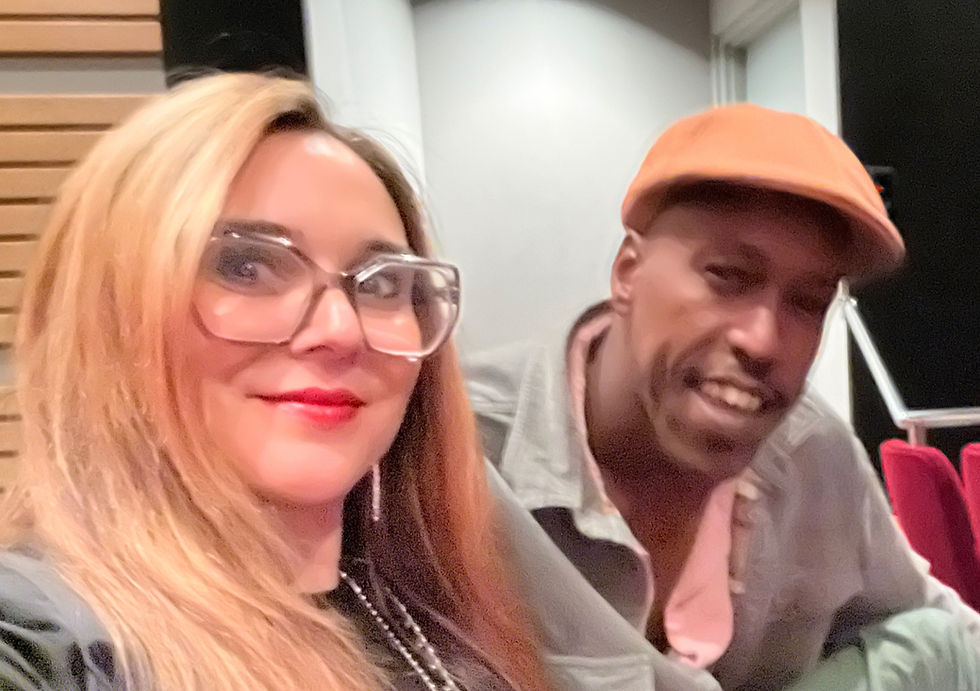
Kristin Burniston, LISFF 2026, Best British TV Pilot
- screening24
- May 22
- 3 min read

-When and how did you get into writing?
I came to writing in my late forties. Life had been difficult for a while, and I was trying to work my way through anger and upset. I didn’t know I was perimenopausal, as it wasn’t a word many people knew at the time. I started journalling and, from there, joined Anna Burtt’s writing group. It came at exactly the right time, and I’m forever grateful to Anna for her enthusiasm, generosity, and guidance with my writing.
I’m fortunate that the work I developed in Anna’s group became my first manuscript, a novel, which gave me a choice of literary agent. I continued developing it through the Creative Writing Programme in Brighton. During COVID, I wrote every day and, with the help of an Arts Council England Project Grant, created the workshop Writing Menopause, which fellow writer Apala Chowdhury helped me develop from the initial idea.
Once restrictions were lifted, I completed my MA in Screenwriting at UAL. My first short story, ANNE, was published in the West Hill Anthology and has since been adapted for Story Radio Podcast.My first award was for my short film script HAIRY MARY, which was runner-up in the Women Over 50 Film Festival. I was so excited and nervous I think I nearly tripped over myself going up to collect it. The script has since been optioned by Killeen It Productions. Since then, all of my scripts–TREE, APPLE FALLS, and AGGIE–have done well in competitions, including BlueCat,Outstanding Screenplays, and Slick Film Fund, to name just a few.
-How often do you write/create/develop ideas? Do you have a writing/creative routine? And what inspires you to write?
I have no shortage of ideas. I write, dream, and discuss ideas all day long. My inspiration comes from everyday life, but also from wanting, as a midlife woman, to have a voice and to be seen and heard. Invisibility starts early. It isn’t pleasant, and my writing is a way of pushing back.

-How does it feel to have your work recognised?
Honestly, it’s wonderful. I’m very grateful, and always so happy when someone else connects with my work. For me, writing is about having a conversation with people and finding our commonality across divides of age, sex, gender, race, and nationality.
-What's the best and most challenging thing about writing/filmmaking in your genre/form?
You need money to finish a film. Does anyone want to gift me £20K so I can complete my first short film? For writing, I just need time to develop all of my ideas.
-How did you develop the idea for your LISFF/LISP-selected work? Is there a story behind your s-tory? And, how long have you been working on it?
The script is based on a novel I’m close to finishing the redraft of, which, by the time you read this, will be done. It is represented by the Lorella Belli Literary Agency in London. The TV pilot itself was written in a month, but the idea, in journal, novel, and feature film form, has been part of my life for eight years. In fact, it was the very first thing I ever wrote.
The original idea came from questioning societal narratives around midlife women’s desire and desirability. How I was seen by others did not match how I felt about myself, and I wanted to explore that gap. My parents also taught me “no sex before marriage”, which, of course, I did not agree with. I wanted to push that idea further. What if a woman decides never to get married? What then, no sex? It’s a very heteronormative, old-fashioned way of thinking, whereas my work tends to be LGBTQ+ in an everyday, ordinary sort of way.
-Can you please give us a few tips about scriptwriting/writing?
Keep writing. Don’t try to be too clever. Be authentic. Write about what interests you. Read, read, read. And when you read or watch something, make notes. What works? What doesn’t work?
-What's the best thing and the most challenging thing about competitions/festivals?
I’d suggest going in with no expectations. Take feedback as a chance to learn. It’s all useful. If you do well, the attention can be very helpful in generating interest for your next project.
-Lastly, do you recommend the writers/filmmakers submit to LISP/LISFF?
Yes, absolutely. I’ve been pleasantly surprised by the attention I’ve received since winning.