%20(8).png)
%20(2)_j.jpg)
%20(2).png)
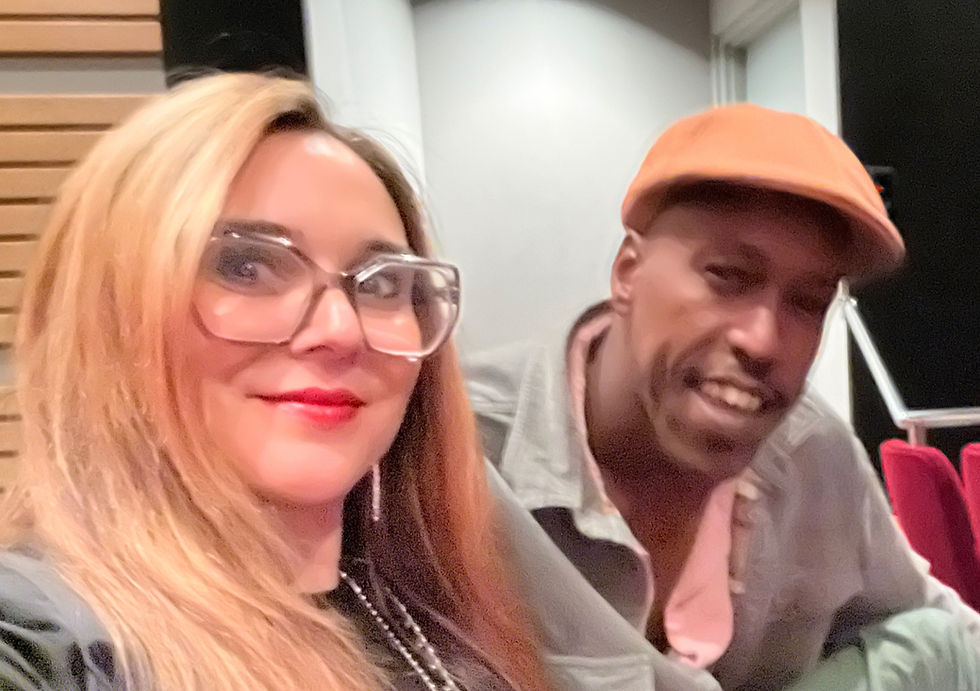
Lukas Scheja, LISFF 2026, Feature Screenplay Finalist

-Can you please tell us about you and your daily life?
For more than four decades, I have dedicated my professional life to acting, remaining closely engaged with the craft both on stage and on screen as an actor through and through. Alongside my work as an actor, I am active as a director, producer, and writer across a range of artistic projects, and have also developed an established practice in photography, while my life beyond the stage—as a father—continues to inform my perspective.
For over 22 years, my wife, who is also an actress, and I have served as the founding directors of an international acting school in Hamburg, which we established in 2004. I also lead an institution for leadership development, where I train managers and CEOs with a focus on presence, communication, and strategic awareness.
Furthermore, I founded a film production company and currently serve as the head of the German Association of Creative Artistic Training Institutions in Hamburg.
My writing moves across different forms, including a compendium of acting methods, several short film scripts currently in development, and poetry that traces aspects of my artistic journey. Over the past two decades, a number of my plays have found their way to the stage. I am presently working on future publications that reflect on the idoim of acting, as well as scholarly articles on themes within the performing arts. This work is complemented by ongoing public speaking engagements.

-When and how did you get into writing?
Both of my parents studied literature and speech at university, and I grew up surrounded by a library of over two thousand significant works. Conversations about literature were a natural and constant part of daily life, shaping my early sensibilities and fostering a lasting curiosity. This environment led me to pursue studies in literature and philosophy, disciplines that have remained foundational throughout my life. In my work as an actor, literature has always been an essential source—informing both thought and practice.
Across the years, I have continued to read, write, and work in multiple languages, allowing these influences to accompany and deepen my artistic development.
Regarding other achievements in writing, in the following festivals we placed first:
2026
· Moondance International Film Festival
Best Feature Screenplay
2025
· Angel Film Awards Monaco International Film Festival
Best Feature Screenplay & Best Fantasy Screenplay
· Los Angeles Film and Script Festival
Best Comedy Script
· Madrid International Film Festival
Best Feature Film
· New York City International Reel Film Festival
Best Feature Screenplay
· Barcelona Planet Film Festival
Best Screenplay
· Creation International Film Festival
Best Feature Screenplay
· American Filmatic Arts Awards
Best Feature Screenplay
-How often do you write? Do you have a writing routine? And what inspires you to write?
Writing accompanies nearly every aspect of my professional, daily life. As an artist, I continually translate lived experience into language.
A text carries its own direction. The writer does not simply impose form, but serves as the medium through which the text can unfold—shaped by circumstance, and context, which all reveal themselves in the act of writing. In this sense, a text is not only constructed, but discovered.
I am inspired by the smallest details of life and seek to give space to what screams for expression—to articulate its meaning and, in doing so, to protect its truth.
-How does it feel to have your work recognised?
It feels like a natural moment for this work to come forward. I have, in many ways, been preparing for it throughout my life.
I have never sought to place my work before an audience uninvited; it has always felt important that it meets a genuine readiness on the other side. Now, as it begins to find its way into wider awareness, I sense that the time is right not only to follow this development, but to move with it—fully and without hesitation.
-What's the best and most challenging thing about writing a Screenplay?
Once a story has found its place, it begins to grow into its own grounded form. The task of the writer is to accompany this process—guiding the material toward an essence that can become perceptible to others. This remains one of the deeper mysteries of writing.
There is always something within the present moment that seeks to be expressed—something not yet fully articulated, yet already present. What is it that wants to be said, and what might it become over time—what form does it take in the years ahead, as it meets an audience, whether in speech, film, or the theatre?
-How did you develop the idea for your LISFF/LISP-selected work? Is there a story behind your story? And, how long have you been working on it?
We began this work during the pandemic, at a time when the stage had fallen silent. Rather than yielding to this interruption, we turned toward it—developing a screenplay for 35 speaking roles as a way of continuing the work under changed conditions. In this sense, this recalls the work of Federico Fellini, who transformed a moment of crisis into cinema in 8½.
At its center, we envisioned the story as a dream: that of a young girl on the threshold of becoming a woman, situated within a large family of artists. Within this dream, she summons her parents—figures she has not fully known in her life—allowing memory and fiction to coexist. Alongside this narrative, we developed an underlying thematic layer in which the figure of the Minotaur transforms into a female form, reflecting a shift in perspective that resonates with the sensibilities of our present time. I accompanied and guided the writing process over the course of two years.
Following this collaborative phase, I undertook an extended period of revision, working independently over 18 months. This process brought me to the various locations in which the story is set, across four countries, where the material was reworked and deepened in German. The final script was then translated into English by Beke Wiese, a very talented student of mine who studied film in London and is a trained translator, resulting in the version that has since been recognized and experienced by you.
-Can you please give us a few tips about writing?
Stories carry their own movement of growth, shaped by the places and circumstances from which they emerge. In this sense, nature itself holds an inherent poetry—one that extends into all forms of artistic expression.
-Can writers, in particular, listen to situations with such attentiveness that they begin to hear what seeks to be spoken through them?
In everyday life, people speak from their lived experiences, often in ways that already carry a poetic dimension—an expression shaped by the immediacy and truth of the moment.
-What's the best thing and the most challenging thing about competitions?
Within competitions, individual voices are brought into a unity of listening, forming a constellation of possible stories for an audience. What is often a solitary act of writing is, in this context, experienced as part of a larger community.
Themes that emerge from the writer’s often isolated experience begin to shift when placed in this collective space—taking on new resonance through their relation to others.
In this way, competitions can become spaces that heal toward the deeper potential of the profession, fostering a sense of empathetic richness within the art of writing.
-Lastly, do you recommend the writers submit to LISA?
Any opportunity for one’s work to be experienced holds the potential to reach and move others in response to the necessities of our time. To submit is, in itself, something to be valued—as an expression of readiness to be heard.
I would definitely encourage writers to submit to LISA, and to be prepared for the commitment this opportunity asks for—whether in time, focus, or other forms of dedication. 🙂