%20(8).png)
%20(2)_j.jpg)
%20(2).png)
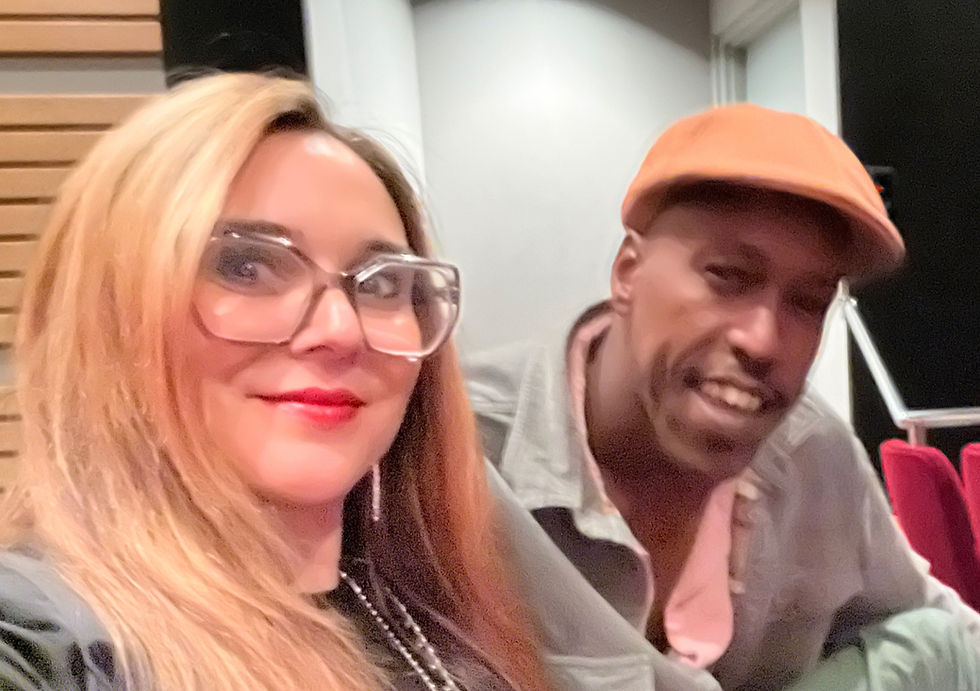
Jennifer Watson, LISP 2025 Poetry Finalist, 'Sentence'

About me
Like most dogged writers, I have written poetry and fiction ever since I can remember, but it was studying for an Open University Diploma in Creative Writing while on maternity leave that gave me the courage to pursue my dream of writing full-time.
Being a finalist in the inaugural Manchester Writing for Children Prize and publication in the anthology, ‘Let In The Stars’ (MMU Press, 2014) really spurred me on. Subsequently, ‘Let In The Stars’ was shortlisted for a CLiPPA Award, and I had the enormous pleasure of seeing children from Barnes Primary School performing my poem, ‘Waiting For Snow’. CLPE has also produced teaching notes on my poems and clips of me performing and being interviewed are on their Poetryline website. My poetry is included in the anthology ‘The Head That Wears The Crown’, (Emma Press, 2018). Three of my poems have recently been published on the webzine, The Dirigible Balloon.
I have been shortlisted for the Bridport Prize, the Wasafiri New Writing Prize, and the Bloomsbury And National Literacy Trust’s Short Story Prize. I am lucky enough to have been taken on by Enrichetta Frezzato at Curtis Brown, and am currently working on my debut young YA fantasy novel. You can find me on Instagram @ watjenwrites
My daily writing routine
Time is the most precious resource, and management of it has been incredibly important to me as I’ve juggled caring for children and my parents. I try to make the most of the time when I can write, and not to give myself a hard time on days when I can’t. I work more efficiently in the morning, so that’s when I try to be at my desk writing something. It may be character or location notes or random thoughts if I can’t write actual poetry or chapters, it’s often editing something from the day before. I’ve created a kind of compost heap of ideas that I draw from when I do have longer periods of time to think and write. Nothing is wasted. The important thing is to write every day. I have found writing haikus really valuable in this respect – they’re like little stock cubes of imagery which I can use later for a richer soup!
How does it feel to have your work acknowledged?

Having my work acknowledged is an incredible buzz! Writing can be a solitary occupation, and external validation is the most amazing spur to keep going – it’s how I imagine winning the lottery would feel!
What’s the most rewarding and challenging aspect of writing a story or poem?
The most rewarding aspect of writing a poem is communicating a thought or feeling in such a way that someone else can also feel it. When a poem works it can be incredibly powerful in that way, like a shared heartbeat. For me, the most challenging aspect of writing is to be truly honest and vulnerable on the page. I’m quite a private person, so it’s a challenge, but it’s always worth it.
How did you come up with your LISP selected poem?
My father suffered from Alzheimer’s, which stripped away the structure and dignity of him, but not his essence. This poem is a reflection on a specific moment when we were holding hands in A&E, and how time and focus can be elastic at moments of intense personal pain. The second half of the poem is an unstructured mirror of the first. I wrote it after his death, because when you’re in the day to day of caring, you don’t have the luxury of space to reflect. I wanted to set the clarity of that moment of grief and joy in amber, preserving it forever so I could turn it around in my fingers, and poetry is the only language that could ever do this for me.
A few writing tips
You can’t write wrong, you can write better. Be authentic and honest, even if it’s painful – the reader can’t hear your unique voice from anyone else and they deserve to hear it. You are worthy of being heard.
Edit! Then keep editing.
I speak my poetry aloud; it doesn’t often rhyme, but it always has a rhythm to it that jars if the words I’ve chosen aren’t right. I try not to be lazy, using predictable or hackneyed expressions, and I make every word justify its place.
Best and most challenging aspects of competitions
Competitions give you hope and make you feel part of a wider community in what can be an isolated occupation. Entering competitions gives you the discipline of coming up with new ideas to a deadline and within a specific word count. The most challenging aspect of entering competitions is probably meeting the deadline!
Would you recommend that writers submit to LISP?
1000% ! It is the most incredible feeling to have been selected as a finalist, and to be given the privilege of sharing some thoughts with other writers. Thank you to the team at LISP!