%20(8).png)
%20(2)_j.jpg)
%20(2).png)
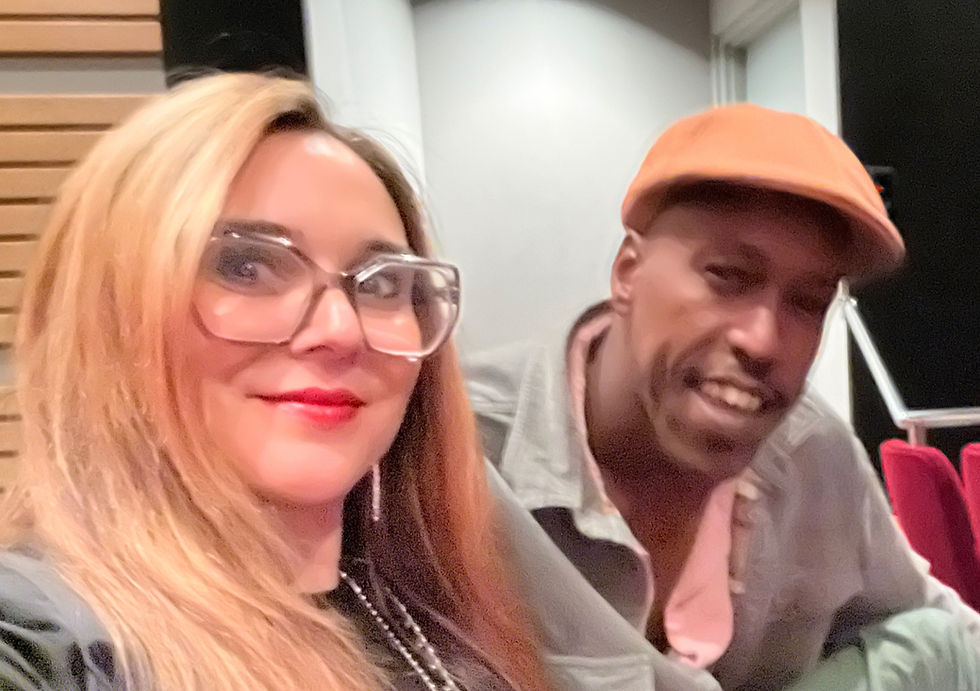
Carol Dorn, LISFF 2026, Feature Screenplay Finalist

– Can you please tell us about you and your daily life?
My life right now is a mix of extremes—creative intensity alongside very practical realities. I’m developing a feature film while also navigating a transitional period personally, so my days can range from writing and packaging a project to working just to keep things moving steady.
What stays constant is the work. No matter where I am or what the day looks like, I return to the story. That discipline has carried me through every phase of my life.
– When and how did you get into writing?
I came to writing through performance. I started as an actor when I was 4 (in The Sound of Music), and very quickly realized I wanted more control over the material—over tone, character, and emotional truth.
When I was about 10 I started drawing my own flip card animation cartoons because my Dad was very protective of his 8mm camera. That led me into writing for stage and screen. Over time, it became the foundation of everything I do.
My short films have gone on to win multiple IMDb-qualifying awards internationally, and I’ve spent years developing long-form work, including my current feature Disclosure from a Cloakroom. Writing has never been separate from my directing—it’s how I build the entire world.

– How often do you write? Do you have a writing routine? And what inspires you to write?
I don’t have a traditional routine, but I write consistently. Even when I’m not physically at the page, I’m working—rewriting scenes in my head, refining structure, listening to the rhythm of dialogue.
What inspires me is human behavior—the things people don’t say, the tension between what is felt and what is expressed. I’m drawn to restraint, to subtext, to the emotional architecture beneath the surface. That is when I love to give actors non-verbal space where their character goes through something revelatory or spirals emotionally. I guess in some ways I love when my writing goes silently into the actor.
– How does it feel to have your work recognised?
Recognition is meaningful, especially when it comes from people who understand the craft. It tells you the work is landing somewhere beyond yourself.
But for me, it’s also a moment to keep going. Writing is such a long game that you learn not to stop at any single milestone. I’ve been writing for decades and have had many experiences to draw from, so I have a tall stack of material already written and ready to put on stage and screen.
– What's the best and most challenging thing about writing a Screenplay?
The best part is discovering something you didn’t consciously plan—a moment or line that feels completely true.
The most challenging part is discipline. Staying with a piece long enough to refine it beyond your first instincts, to push past what’s easy into something more precise and honest. And I would have to say writing scenes around sexual assault is one of the hardest things I have done. But important for obvious reasons.
– How did you develop the idea for your LISFF/LISP-selected work? Is there a story behind your story? And, how long have you been working on it?
This has an interesting origin story actually. It started as a series of monologues that I wrote to challenge myself. I was working as a cloakroom attendant at a restaurant at the then wrap party restaurant for SNL called Columbus on 79th and Columbus. And I thought ok I am going to write monologues about scent and write about it in such a way that the audience thinks they are smelling those scents or deeply recalls them like the cold night air and perfume on a mother’s fur coat when the parents finally come home and the child gets a good night kiss. After I wrote those I was going to call them “Confessions from a Coatchek” but then I was approached by a young British woman looking for a vehicle to launch her acting career back in London and I was recommended. So I took those monologues and broke them up into dialogue and created 5 characters all working together in a restaurant where the hang out area is the cloakroom area. The young woman never followed through and I was in love with it at this point and it ended up being done at the Tristan Bates with Suzanne Belle directing, and some of the cast were William Beck (Casualty) and Isobelle Middleton (Cracker/East Enders) when they were just starting out. And they were brilliant then too. So this began as a play long before it became a screenplay.
– Can you please give us a few tips about writing?
Write past your first idea - that’s usually the obvious one.
Trust what’s underneath the dialogue as much as the words themselves. Subtext is always where it gets interesting.
And most importantly, finish things. You learn more from completing a piece than from endlessly refining something unfinished. I would also say after you finish it, put it down for a couple of weeks and then look at it again. Most people can write a first draft; what comes after - that’s when the real work begins.
– What's the best thing and the most challenging thing about competitions?
The best thing is visibility. Competitions can introduce your work to readers and opportunities you might not otherwise reach.
The challenge is not attaching your sense of value to the outcome. There are too many variables. You have to stay grounded in the work itself.
– Lastly, do you recommend the writers/filmmakers submit to LISP/LISFF?
Yes. Any platform that genuinely supports emerging and established writers, and creates space for their work to be seen, is valuable.
It’s another step in the larger process—and every step counts.