%20(8).png)
%20(2)_j.jpg)
%20(2).png)
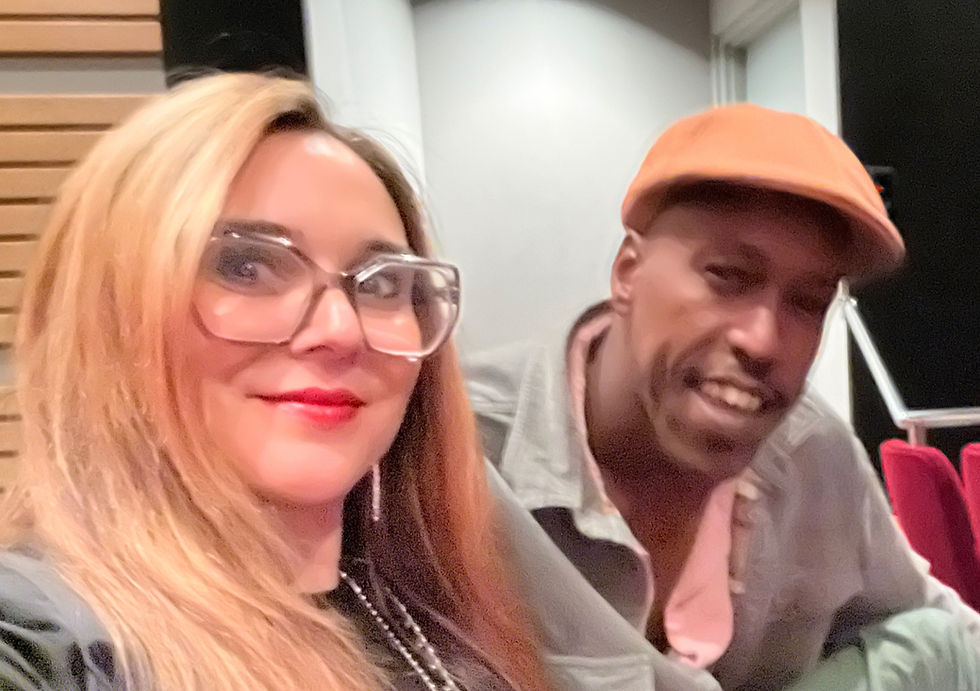
Tobi Iverson, LISFF 2026, Feature Screenplay Finalists
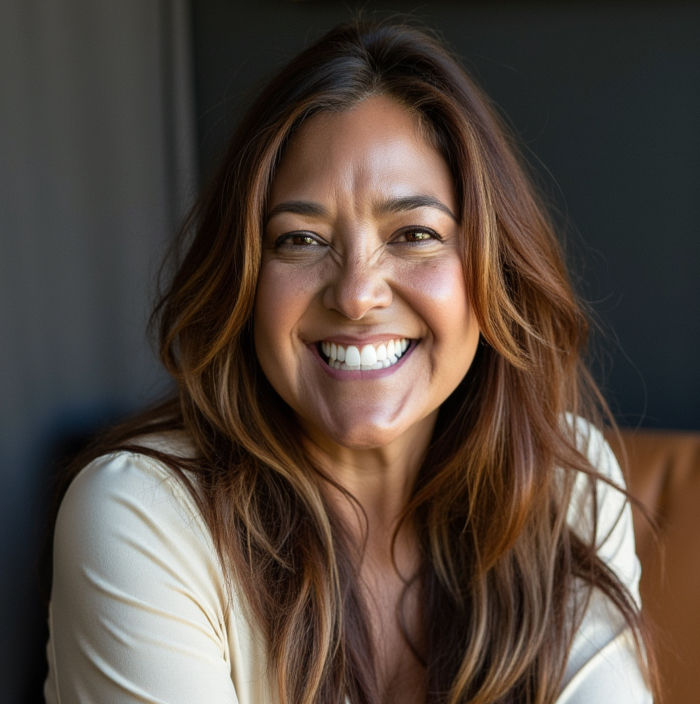
-Can you please tell us about you and your daily life?
My name is Tobi Iverson. I am a Tsimshian, Nisga'a, Killer Whale Clan, and Turtle Mountain Chippewa screenwriter and cultural producer based in Steilacoom, Washington. I am a 2026 Artist Trust Fellow and the founder of Bentwood Pictures.
My daily life is shaped almost entirely by this project right now. I write, research, and think about the Northwest Coast the way some people think about music. It's just always on. I have more art and history books than I'll ever finish reading, and my computer literally sits on a stack of them. My husband John keeps me grounded. He's heard a lot of scenes by now. Poor guy.
-When and how did you get into writing/filmmaking?
I came to screenwriting through a documentary made by a Native woman filmmaker that I saw premiere at the Santa Fe Indian Art Market. It stopped me cold. A summer intensive in Los Angeles followed, and writing was the piece that made me lose track of time entirely. That's how I knew.
What's underneath all of it goes back to a moment in a university film class. I watched Dances with Wolves and made myself a quiet promise. Not a goal. Not a dream. A vow: one day there would be a film like that about the Northwest Coast tribes. I carried that vow for nearly twenty years.
I didn't act on it until 2021, when my husband nearly died, we lost everything, and I found myself at a crossroads with nothing left to lose. That turned out to be the best creative condition I've ever been in.
Since then, Wild Woman of the Woods has been recognized across eight countries. It won the Pitch Competition at the Austin Film Festival, earned a Silver Remi Award at WorldFest-Houston, a Bold Voice Award from The Writers Lab Canada, and recognition from Flickers' Rhode Island International Film Festival, the Montreal Women Film Festival, Santa Barbara Screenplay Awards, and others. I am a 2026 Artist Trust of Washington Fellow.

-How often do you write/create/develop ideas? Do you have a writing/creative routine? And what inspires you to write?
Every day, in some form. Not always pages. Sometimes it's sitting with the art books, or reading the colonial records with a critical eye, or visiting archives. I spent two days in the Bill Holm Center at the Burke Museum earlier this year, handling pre-contact objects. That's research, but it's also writing. It feeds the work in ways that can't be replicated at a desk.
What inspires me? The ancestors I never met. Arthur Wellington Clah (1831-1916), the only known Indigenous diarist of his time. He wrote in his journals every day for fifty years while his world was being taken apart. He kept writing. If he could do that, I can finish a screenplay. That's not inspiration. That's obligation. The good kind.
And honestly, I want to make grown men cry at my movie. That's a real goal. My husband is my first test. If a scene gets him, I know I'm on track.
-How does it feel to have your work recognized?
Each recognition lands differently. The Artist Trust Fellowship said something specific. Artist Trust looked at this project, this very particular, very Indigenous, very personal story about the Northwest Coast in 1862 and said: this matters. We see it. Keep going.
For an artist who has largely worked alone, without an MFA cohort or an inherited industry network, that signal carries weight. It doesn't just give me confidence. It tells the industry the work has been vetted, that it belongs in the conversation. And for a story about people who were told for 150 years that they didn't belong anywhere, that particular signal carries a lot of weight.
Being a Finalist here at LISA matters for a different reason. You've built something that genuinely embraces multicultural voices, not as a category, but as a commitment. That's rarer than it sounds.
-What's the best and most challenging thing about writing/filmmaking in your genre/form?
The best thing: the material is inexhaustible. The history of the Northwest Coast tribes in 1862 is so rich, so complex, so underrepresented that I will never run out of story. I'm not inventing a world. I'm excavating one.
The most challenging thing: everything that makes it powerful also makes it difficult to place. This isn't a genre film. It isn't a prestige biopic with a familiar cultural frame. It is mythic and historical and political and supernatural all at once, told from inside a culture most audiences have never encountered. The work I have to do isn't just on the page. It's helping people understand why this story exists and why it has to be told at scale.
-How did you develop the idea for your LISFF/LISP-selected work? Is there a story behind your story? And how long have you been working on it?
There is a story behind this story, and it begins in London.
In 2023, I stood in the Wellcome Collection holding the journals of Arthur Wellington Clah, my great-great-grandfather, the only known Indigenous diarist of the 1862 Northwest Coast smallpox epidemic. Sixty-nine volumes. Fifty years of daily writing. 650,000 words in a language he taught himself in two months.
He wrote his mission across every journal: "writed by him to let all new people know about old People."
Here is what I find extraordinary about that moment: the Wellcome Collection is a product of empire. It was built to document, to classify, to contain the evidence of other cultures. And yet it was precisely that colonial impulse to preserve and archive that kept my great-great-grandfather's journals intact; his voice, his words, his mission for over a hundred years, until a descendant could walk through the door and find them. The archive meant to record the world he was losing became the vessel that carried him forward to me. I am genuinely grateful for that. It is a complicated gratitude, and it is real.
When I touched those pages, I knew I had to finish the screenplay.
I have been working on Wild Woman of the Woods since 2021. The story itself is historical fiction, not autobiography, not documentary. It's a story I made up, inspired by real events, real culture, and real history, told through myth and imagination. What I bring to it is emotional fluency: growing up outside of my culture, I understood displacement from the inside. That understanding is the emotional engine. The history belongs to the Northwest Coast tribes, to the 1862 smallpox epidemic, to the people who survived it.
Here's what the history books don't tell you: our people were so sophisticated, so independent, so formidable that European powers wrote home about their own failure to outsmart or outmaneuver us. That record exists. We weren't conquered, we were deliberately infected. What colonialism couldn't accomplish by force, it attempted through disease and deception. That's the story I'm telling. Not noble savages. Not headhunters. A people so strong it took a conspiracy to bring them down.
-Can you please give us a few tips about filmmaking/scriptwriting/writing?
A teacher once told me: whatever you write, for god's sake, do not bore me. Tell a good yarn. Make me laugh. Make me feel something. That's stuck.
I used to worry about whether my work was important enough. Now I know the only way it becomes important is if it's first alive.
Write the story that scares you a little. The one that feels too big and too personal. Those are always the ones worth writing.
-What's the best thing and the most challenging thing about competitions/festivals?
The best thing: they create a paper trail of credibility for work that doesn't fit a familiar mold. A formally distinctive, culturally specific script needs external validators. Competitions provide that, especially across international markets where the appetite for this kind of story is real.
The most challenging thing: no competition tells you who else responded to the work. You get a placement, sometimes feedback, and then silence. The relationship stops where it could begin. That's why I think of every recognition as an opening, not an endpoint, and why I'm grateful when a festival like LISA builds community around its selections rather than just announcing them.
-Lastly, do you recommend writers/filmmakers submit to LISP/LISFF?
Yes, with one specific reason: you've built something that takes the multicultural voices mandate seriously. It's in how you run the community, how you communicate with your selections, how you've structured the festival to include both screenplay and film. That's an ecosystem, not just a competition.
For writers working outside the dominant cultural frame, and there are more of us than the industry currently reflects, that ecosystem matters.