%20(8).png)
%20(2)_j.jpg)
%20(2).png)
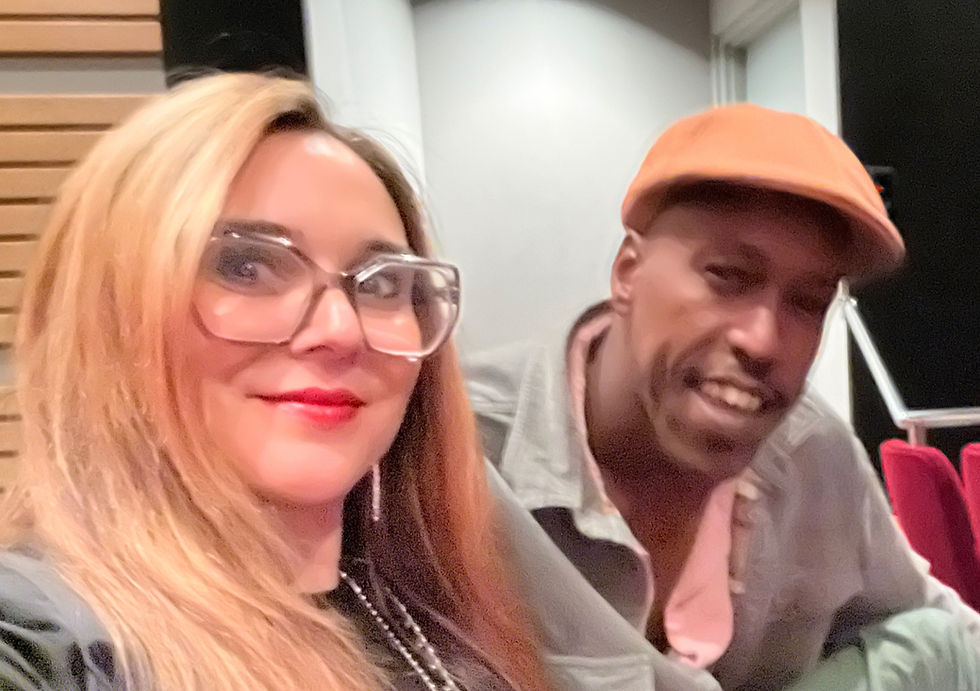
Kenneth Gover & Emma Gover, LISFF 2026, Feature Screenplay Finalist

-Can you please tell us about you and your daily life?
Ken is a semi-retired dentist who writes cabaret scripts for local cabarets and restores vintage cars. Emma is an unemployed hippie who spends a lot of time in the garden.
- When and how did you get into writing/filmmaking?
Ken, after writing many cabaret scripts and a blog, felt that a comedy film subtly drawing attention to serious current social and political issues in Australia would be a worthwhile project.
Emma stumbled into a share-house of indie filmmakers and couldn’t help but become interested. She ended up producing and hosting an artsy community tv show which sparked a passion for film and tv and as a writer. Writing for film and tv seemed to come naturally as a hobby. She studied film and tv in fine arts focusing on writing, directing and editing at Victorian College of the Arts.
- How often do you write/create/ develop ideas? Do you have a writing/creative routine? And what inspires you to write?
Kooralya began as a short film script and after attending the Italian Quiet Collective Script to Pitch Workshop, became a feature film script. We were encouraged to write a full feature film script based on the original short film. We write whenever we have the opportunity to be together usually spending ten hours a day, for consecutive days, writing.

- How does it feel to have your work recognised?
Ken: I am excited by the thought that the film could be produced and overflow with ideas to enrich and elaborate the original concept.
Emma: Its a competitive industry where recognition for writing scripts can be few and far between and so it is very encouraging to have your work recognised.
- What's the best and most challenging thing about writing/filmmaking in your genre/form?
Ken: Keeping the audience interested and amused whilst maintaining a meaningful theme.
Emma: Most challenging is not to lose yourself in overcommitment to a project. The best thing about writing for film is the opportunity to engage your imagination. Co-writing is wonderful as it makes this part of filmmaking, which can be a bit lonely, into a shared experience.
- How did you develop the idea for your LISFF/LISP-selected work? Isthere a story behind your story? And, how long have you been workingon it?
Our initial short screenplay on which Kooralya the feature script is based, was written almost eight years ago when Ken was running as a candidate for a greens party in a state election and Emma was newly graduated from her film school degree. The feature film script came about late last year and progressed through eight drafts to the form that was entered in the competition.
- Can you please give us a few tips about filmmaking/ scriptriting/writing?
Ken: Its possible to present a serious theme and convey an important message without intense, dramatic dialogue.
Emma: No matter how wild and carefree and artistic you think you are, sticking to conventions about formatting screenplays is a good idea when it comes to engaging the interest of readers- especially from the industry.
- What's the best thing and the most challenging thing aboutcompetitions/festivals?
Ken: It gives you an opportunity to have your work appraised by people from the industry. The most challenging thing is dealing with the internet from a geographic location where the internet signal is unreliable.
Emma: The chance to have your work submitted for peer review is fantastic!
- Lastly, do you recommend the writers/filmmakers submit to LISP/LISFF?
Ken: Certainly do!
Emma: Absolutely!